An off-the-shelf fuel semi trailer works for some fleets. But if your routes cross unpaved mountain passes, your cargo alternates between petrol and jet fuel, or your local regulations demand specific axle-load compliance, a standard trailer forces you to compromise — and compromise costs money. A custom fuel semi trailer, specified correctly from the start, pays for itself through higher payload, lower maintenance, and a perfect fit for your actual operation. This article walks you through every major specification decision, so you can order with confidence and get exactly the trailer your business needs.
When Do You Need a Custom Fuel Semi Trailer?
You need a custom fuel semi trailer when your operation does not fit the standard template — and most growing fleets reach that point faster than they expect. The signs are clear: you are leaving payload on the table because a standard tank is too small or too heavy, you are running extra delivery trips because a single-compartment trailer cannot split products, or your maintenance costs are climbing because the trailer was not built for your road conditions. A custom fuel semi trailer solves these problems at the specification stage, before a single weld is laid. The upfront planning takes a few extra days; the operational savings last the life of the trailer.
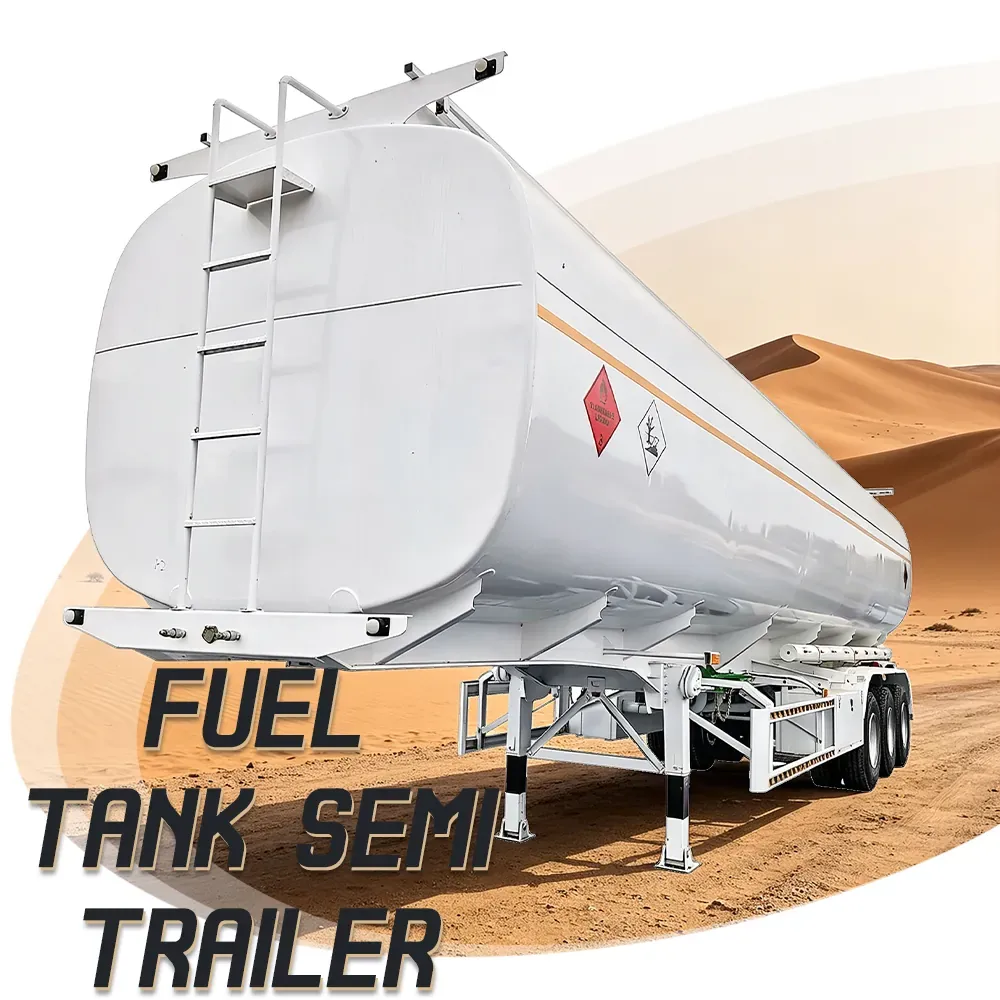
How to Choose the Right Tank Capacity
Tank capacity is the most fundamental specification on a custom fuel semi trailer, and the mistake most first-time buyers make is going too small to save on upfront cost. A 30,000-liter fuel semi trailer may be cheaper on the invoice, but if your routes demand 40,000 liters per trip, you are buying two trailers and paying two drivers for what one properly specced trailer could handle. Conversely, over-specifying capacity adds unnecessary weight and fuel consumption. The right number comes from your daily route demand, your tractor head's towing capacity, and the axle-load limits on the roads you actually drive. Work backward from your largest regular delivery volume, then add a 10% buffer for growth.
Single or Multi-Compartment: Which Configuration Serves Your Routes Best?
A single-compartment fuel semi trailer is the simplest and lightest configuration — one tank, one product, one discharge system. It is the right choice if you haul the same fuel type on every trip and maximize capacity per run. But if your delivery network includes retail stations that need petrol, diesel, and kerosene in smaller quantities, a multi-compartment fuel semi trailer is the smarter investment. With 3 to 5 independent compartments, each with its own discharge system, one trailer replaces two or three separate runs. Specify compartment sizes based on the proportion of each product in your typical delivery schedule — not equal divisions. A 60/25/15 split across three compartments often reflects real-world demand more accurately than three equal chambers.
Aluminum Alloy vs. Steel: Selecting the Right Material
Material choice on a custom fuel semi trailer is not just about weight — it is about total cost of ownership, corrosion resistance, and long-term regulatory compliance. Full aluminum alloy construction using 5083 or 6061-grade material reduces tare weight by up to 30% compared to steel, which directly increases your legal payload capacity on every trip. Aluminum also eliminates the rust problem — no sandblasting, no rust-proofing, no panel replacement due to corrosion. Steel fuel semi trailers still exist in the market, primarily because they are cheaper to manufacture, but the operational cost gap widens every year. For fleets operating in tropical, coastal, or high-humidity regions, aluminum is not a preference — it is a necessity.
Axle Configuration, Suspension Type, and Braking — Getting the Base Right
The running gear on a custom fuel semi trailer determines how it handles your roads, how much it can legally carry, and how much maintenance it will need over its lifetime. Axle count — 2, 3, or 4 — should be selected based on your maximum loaded weight and the per-axle limits enforced on your routes. A 3-axle configuration suits most long-haul fuel semi trailer applications, but routes with strict 8-ton-per-axle limits may require a 4-axle spread.
Suspension choice — mechanical leaf spring or air suspension — affects ride quality, tank stress, and tire wear. Air suspension provides superior shock absorption, reducing fatigue stress on the tank structure, but costs more upfront. Mechanical suspension is simpler and cheaper to maintain, but it transmits more road shock to the tank. For a fuel semi trailer carrying sensitive or high-value product over rough roads, air suspension often pays for itself in reduced tank repairs.
Brake specifications should include a dual-line air brake system with ABS as standard on any modern custom fuel semi trailer. Specify the brake chamber size and type based on your axle load, and ensure compatibility with the tractor heads in your fleet. Do not compromise on braking — the cost difference between a basic and a fully specced brake system is marginal compared to the consequence of a brake failure.
Discharge Systems and Pump Options
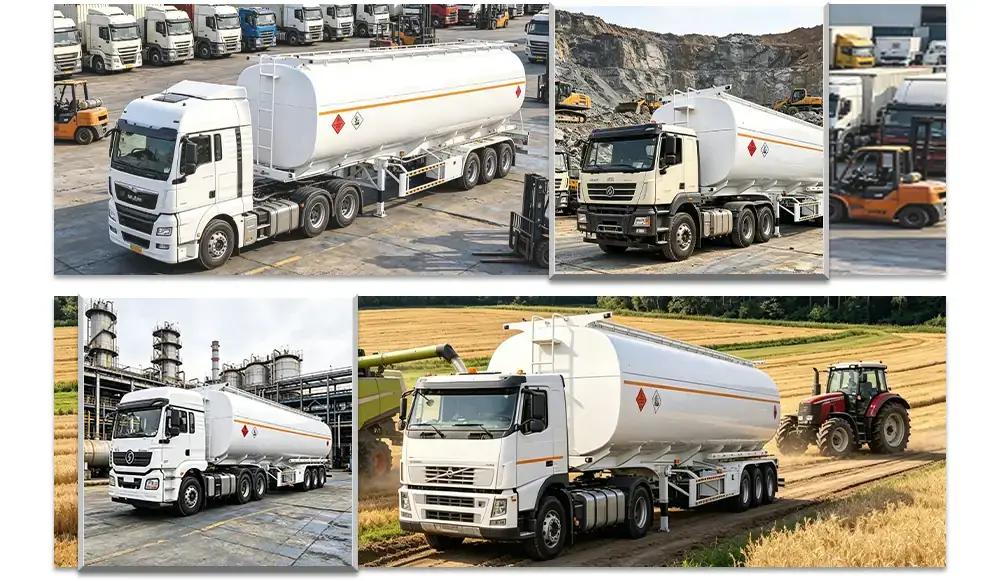
How your custom fuel semi trailer unloads product is just as important as how it carries it. The standard configuration is bottom gravity discharge with API couplers — simple, reliable, and low-maintenance. If your delivery points lack the elevation for gravity discharge, or you need faster unloading at high-throughput stations, specify an onboard pump-and-meter system. Pump choice — centrifugal, vane, or gear — depends on the viscosity of the products you haul and the flow rate your customers expect. A fuel semi trailer delivering to aviation customers, for example, may require a high-flow pump with filtration to meet jet fuel quality standards. Specify your discharge system based on the worst-case delivery scenario you face, not the easiest one.
How the Custom Ordering Process Works
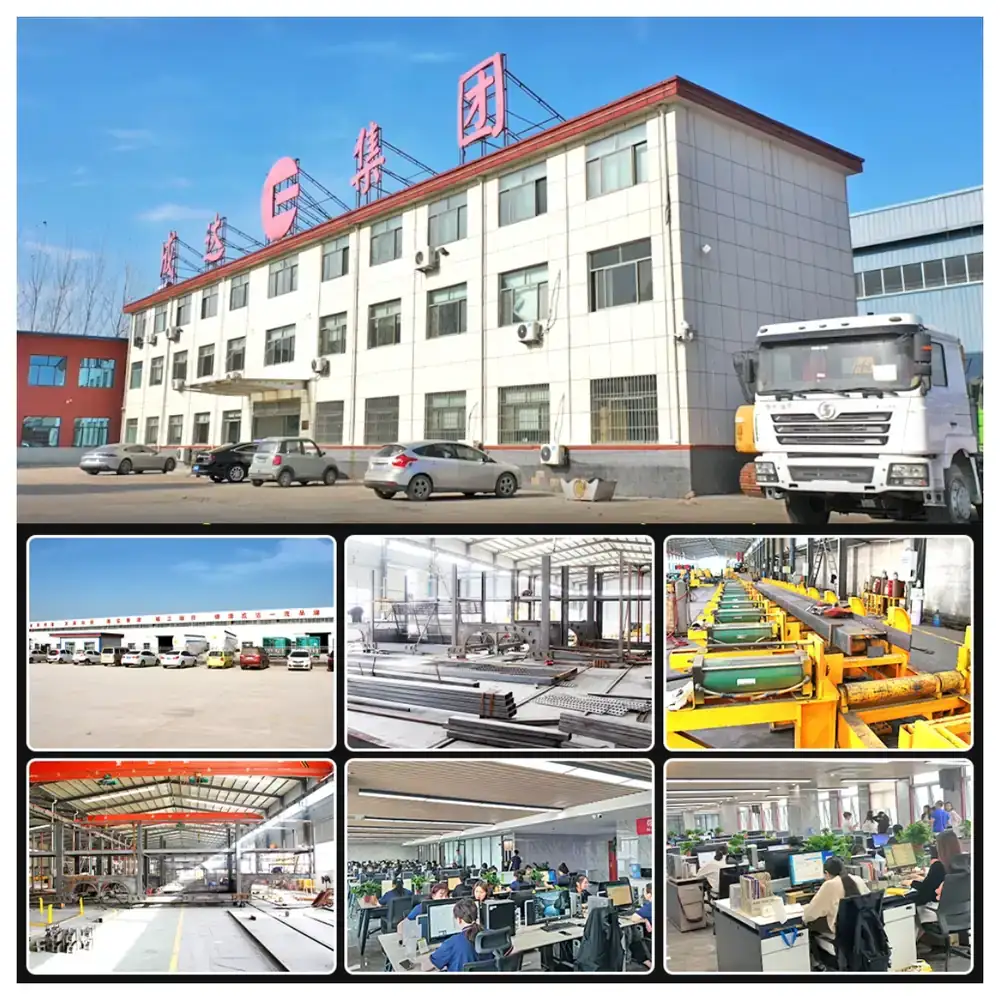
Ordering a custom fuel semi trailer should not feel like a guessing game. At Shandong Chengda Auto Sales Co., Ltd., a certified Chinese trailer manufacturer founded in 2005, the process starts with your operational data — not a catalog of fixed options. You provide your route profiles, product types, delivery volumes, axle-load limits, and any special requirements. Chengda's engineering team translates those inputs into a detailed specification sheet for your review before any production begins. Lead times run 25 to 35 days for standard custom configurations and 45 to 60 days for highly specialized builds. Every unit ships with full compliance documentation and a parts catalog. Their remote after-sales team provides online technical support and spare parts coordination for fleet buyers across Africa, Latin America, and Southeast Asia. For a fuel semi trailer buyer who needs a trailer built for the work, not adapted to it, the upfront specification call is the most valuable hour you will spend.
Key Specifications Checklist for Your Custom Fuel Semi Trailer
Before you contact a manufacturer, have these answers ready. They turn a vague idea into a buildable specification:
Tank capacity required? Work backward from your largest regular delivery volume, plus a 10% growth buffer.
Number of compartments? How many different products do you deliver in a typical week?
Material: aluminum or steel? If your routes touch humidity, salt air, or unpaved roads, aluminum alloy is the default answer.
Axle count and suspension type? Based on the maximum loaded weight and road conditions.
Discharge method: gravity or pump? What infrastructure exists at your delivery points?
Special requirements? Anti-theft systems, telematics, fire suppression, regulatory certifications.
Key Takeaways for Specifying Your Custom Fuel Semi Trailer
Specifying a custom fuel semi trailer is not complicated — but it does require clarity about your operation:
1. Start with your routes, not a catalog. The right fuel semi trailer specification comes from your road conditions, delivery volumes, and product mix — not a list of standard options.
2. Invest in aluminum and air suspension if your routes are rough or coastal. The upfront premium pays back through higher payload, lower maintenance, and longer service life.
3. Choose compartment sizes based on real delivery data, not equal splits. A data-driven compartment layout reduces your total number of trips.
4. Work with a manufacturer that builds to your spec, not their inventory. A factory that starts with your operation and works backward to the trailer will always deliver a better result than one that starts with a standard design and tries to adapt it.
Final Thoughts
A custom fuel semi trailer is not a luxury — it is a business decision. When your operation has outgrown the standard catalog, the cost of compromise is higher than the cost of specification. Every hour you spend defining the right tank capacity, compartment layout, material grade, and running gear before you order pays back over the 15 to 20 years that a well-built fuel semi trailer will serve your fleet.
Shandong Chengda Auto Sales Co., Ltd. has spent nearly two decades helping fleet buyers specify and build fuel semi trailers that fit their actual operation — not someone else's assumptions. If you are ready to move beyond off-the-shelf compromises, the next step is a conversation about your routes, your products, and your goals. The trailer follows from there.